
Medical Exercise Assessment Step 4: Musculoskeletal/Neuromuscular Evaluation
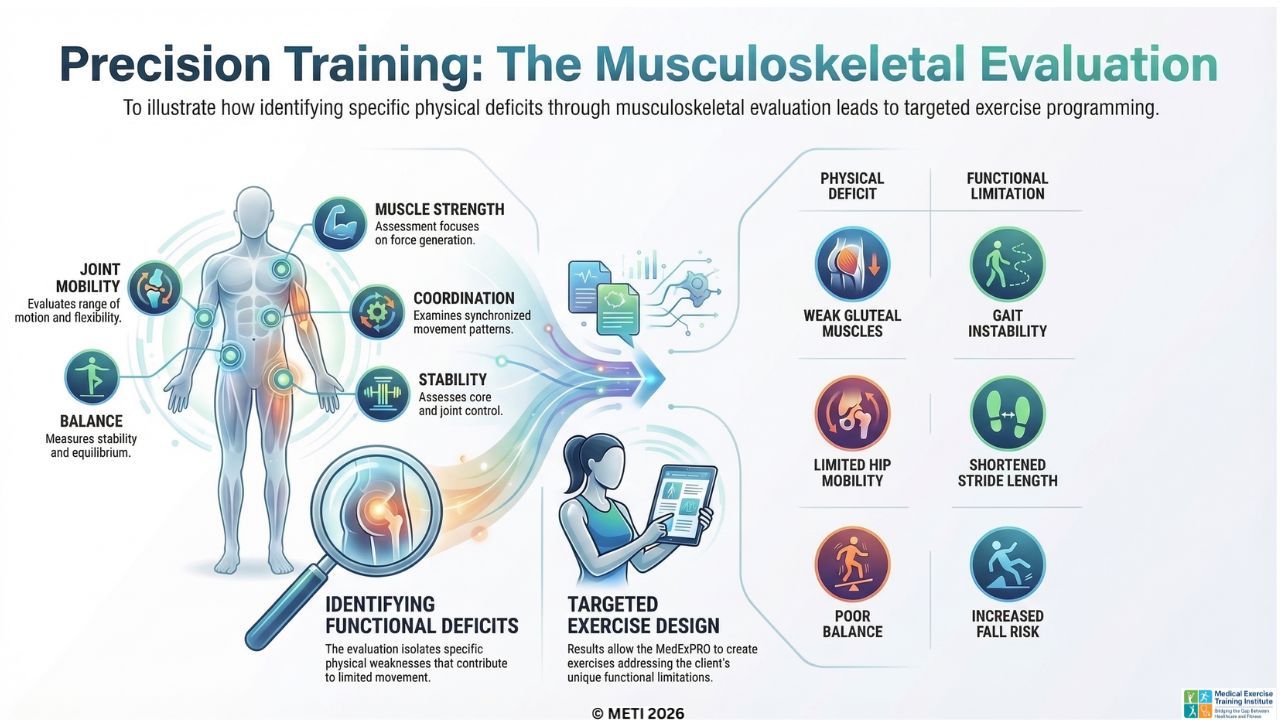
As a Medical Exercise Professional (MedExPRO), your assessment process is the foundation of a successful client program. After completing your pre-assessment preparation, initial observation, and functional interview, it is time to move on to step four of the seven-step medical exercise assessment series: the Musculoskeletal and Neuromuscular Evaluation.
Transitioning to Formal Testing According to Dr. Mike, originator of the Medical Exercise Specialist Certification, step four is where the formal testing begins. Based on the specific condition of your client, you will identify which region of the body is affected—whether that is a hip issue, a knee issue, or a shoulder issue.
Once the region is identified, you will take your assessment forms and apply the appropriate regional assessment procedures. This phase evaluates key physical components, including:
- Strength
- Range of motion
- Balance
- Coordination
- Stability
- Endurance
The Goal: Functional Deficits, Not Clinical Diagnoses It is vital to remember that the goal of this step is not to perform a full clinical assessment. You are not trying to diagnose a medical condition. Instead, your objective is to identify functional deficits that exercise can improve and to establish baseline measures for those deficits.
Common examples of these functional deficits include weak gluteal muscles that negatively affect a client's gait pattern, limited hip mobility that shortens their stride length, or poor balance that causes difficulties when making directional changes.
A Real-World Example Dr. Mike shares a perfect example of how this evaluation works in practice. While assessing a male client, Dr. Mike performed targeted muscle testing. He checked the client's quadriceps and hamstring strength, as well as his hip flexion, abduction, and adduction strength. He then moved the client to a flat surface/bed to perform hip bridging, which provided a rough idea of the client's gluteus maximus strength.
The findings? The gentleman actually demonstrated pretty good strength during the isolated muscle testing. However, the evaluation revealed that the real problem was whether he could ambulate safely, particularly when navigating turns and making changes in direction. This highlights exactly why establishing baselines across multiple physical components—not just strength—is so crucial for designing an effective, functionally-focused exercise program.
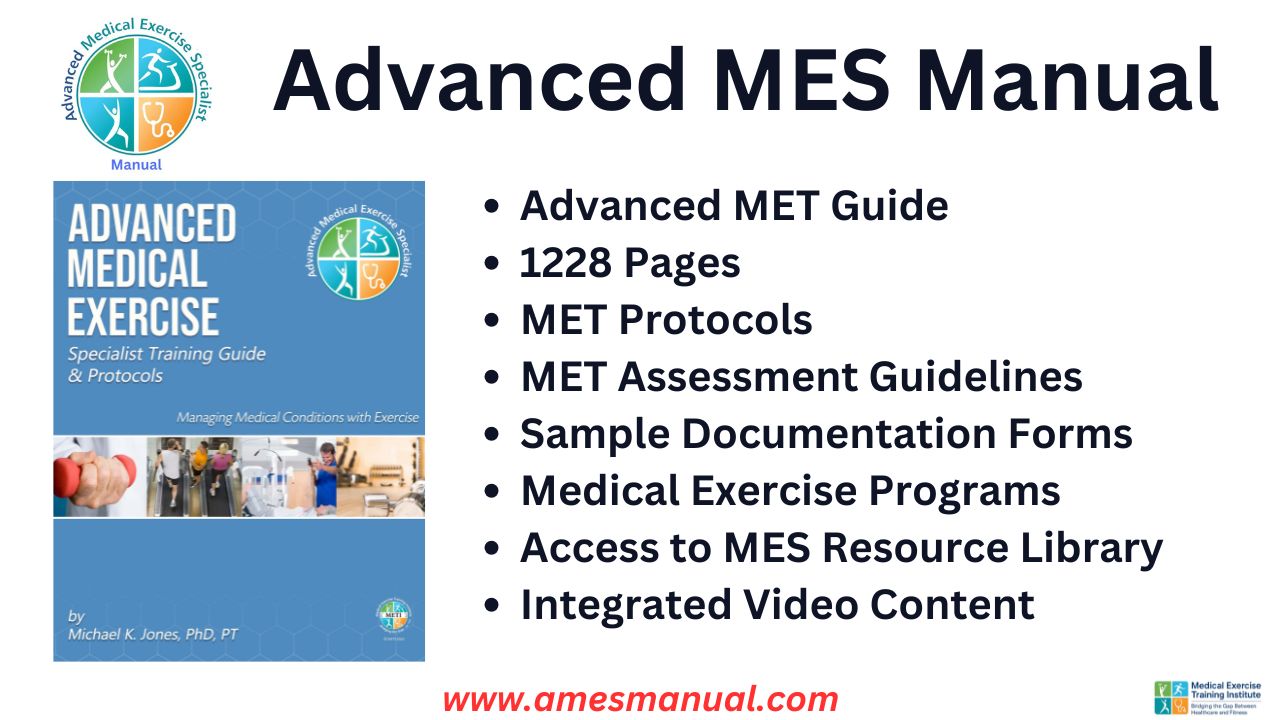
Details on medical exercise assessments for each major joint as well as neurological conditons are reviewed in detail and step-by-step procedures in the Advanced Medical Exercise Specialist (AMES) Manual. Click to get more info on the AMES Manual.
Get Medical Exercise Training guidelines and updates!
Build your practice with tips learned over 28+ years teaching MedXPROs around the world!!